
As a Secondary 1 student, navigating the vast landscape of literature can be a challenging task.
It is time to level up from primary school level fiction books and comics, to a wider genre. Reading exposes you to complex ideas, arguments, and perspectives, sharpening your critical thinking skills and equipping you to evaluate information effectively. Reading also exposes you to new ideas, cultures, and perspectives, fostering curiosity and a love of learning. It ignites your imagination and inspires you to explore the world around you further, setting the stage for lifelong learning.
To support your child’s ongoing journey in English learning, our English curriculum specialists have put together a list of recommended reads to help foster a stronger passion for reading.
| 1. | Jonathan Livingston Seagull – R. Back (Novel / Fable) Jonathan Livingston Seagull, written by Richard Bach and illustrated by Russell Munson, is a fable in novella form about a seagull who is trying to learn about life and flight, and a homily about self-perfection. Bach wrote it as a series of short stories that were published in Flying magazine in the late 1960s.
|  |
| 2. | The Village by The Sea – Anita Desai (Novel / Young Adult Fiction) In The Village by The Sea, Desai describes the poverty, hardships and sorrow faced by a small rural, community in India. Thul, a tiny fishing village not far from Bombay, continues to follow those rhythms of the seasons that have always been handed down. Hari and Lila were born and raised in the village, but now their family is falling into despair: the father to alcohol while the mother is seriously ill. As for money, that there is not even enough to meet their most basic needs.
|  |
| 3. | Diary of Anne Frank – A. Frank (Autobiography / Diary) The Diary of Anne Frank, is a book of the writings from the Dutch language diary kept by Anne Frank while she was in hiding for two years with her family during the Nazi occupation of the Netherlands. When this boisterous girl is suddenly cooped up in a set of small rooms with blacked out windows, which she has to share with another family who are virtual strangers to her, the effect on her “personal growth” is obvious.
|  |
| 4. | My Family and Other Animals – G. Durrell (Autobiography) When the unconventional Durrell family can no longer endure the damp, gray English climate, they do what any sensible family would do: sell their house and relocate to the sunny Greek isle of Corfu. My Family and Other Animals, was intended to embrace the natural history of the island but ended up as a delightful account of Durrell’s family’s experiences, from the many eccentric hangers-on to the ceaseless procession of puppies, toads, scorpions, bats, geckoes, ladybugs, glowworms, octopuses, and butterflies, into their home.
| 
|
| 5. | The Garbage King – E. Laird (Novel / Adolescent Literature) What happens when there is no one to turn to? Meet Mamo and Dani, each from different sides of the track. Each running away from something. There is a bullying father, sick mother, absent parents and child trafficking. As their separate stories are told they find each other when they are most lost. Each has something to give and share as their friendship grows on the uncertain streets of Addis Ababa. Elizabeth Laird’s heart wrenching teen fiction book is infused with hope.
|  |
| 6. | Animal Farm – George Orwell (Novel / Allegory) A farm is taken over by its overworked, mistreated animals. With flaming idealism and stirring slogans, they set out to create a paradise of progress, justice, and equality. Thus the stage is set for one of the most telling satiric fables ever penned –a razor-edged fairy tale for grown-ups that records the evolution from revolution against tyranny to a totalitarianism just as terrible. Not to forget, this is an allegory of the Russian Revolution during Stalin’s era.
|  |
| 7. | The Giver – Lois Lowry (Novel / Dystopian Literature) {N.B.. also Hunger Games and Divergent series} Jonas’s world is perfect. Everything is under control. There is no war or fear or pain. There are no choices. Every person is assigned a role in the Community. When Jonas turns twelve, he is singled out to receive special training from The Giver. The Giver alone holds the memories of the true pain and pleasure of life. Now, it is time for Jonas to receive the truth. There is no turning back.
|  |
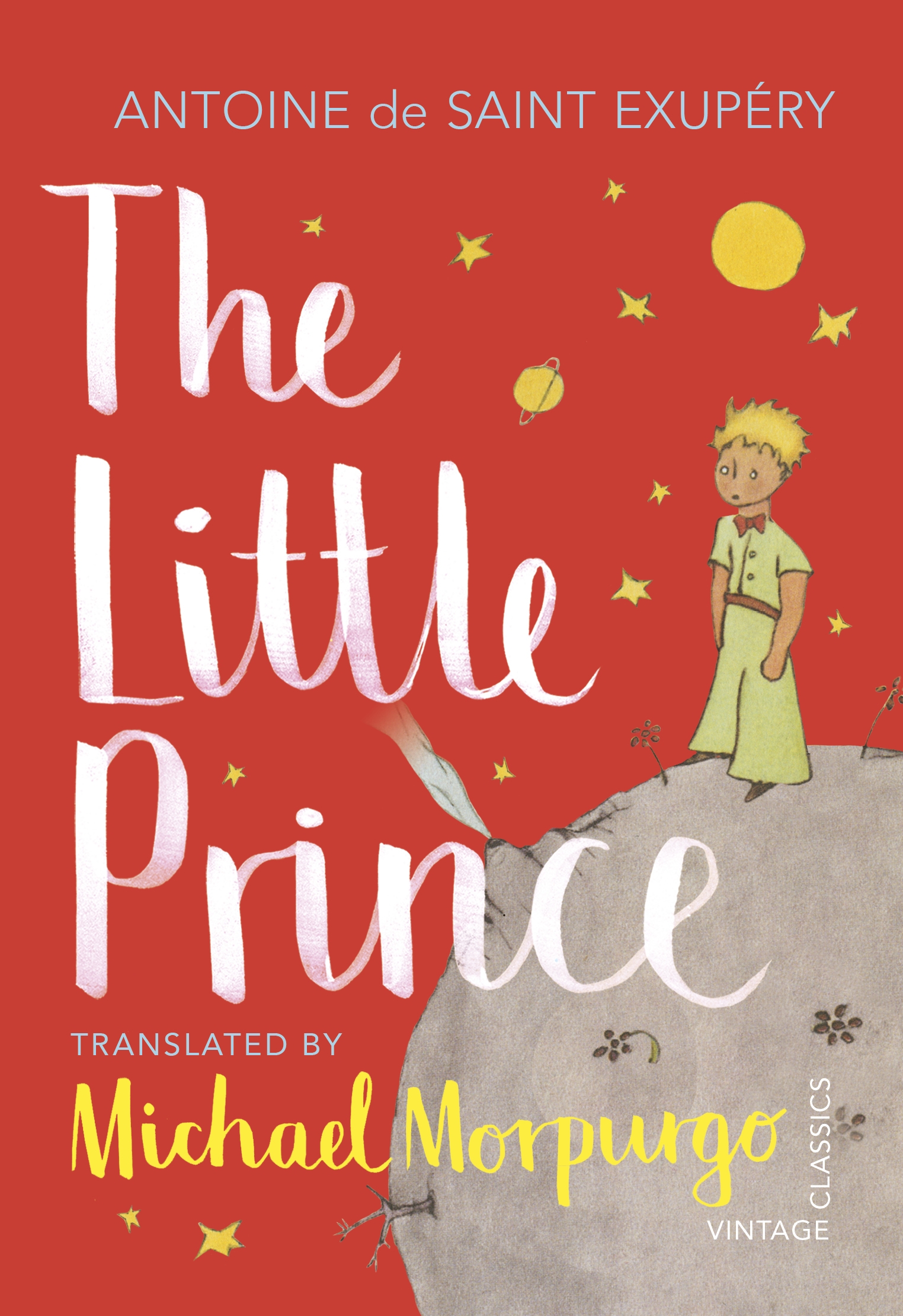
| 8. | The Little Prince – Antoine de Saint-Exupery (Novella / Allegory)
Moral allegory and spiritual autobiography, The Little Prince is the most translated book in the French language. With a timeless charm it tells the story of a little boy who leaves the safety of his own tiny planet to travel the universe. From the many planets he visits, including earth, he learns the vagaries of adult behaviour through a series of extraordinary encounters. His personal odyssey culminates in a voyage to Earth and further adventures which get readers to explore the themes of loneliness, friendship, love, and loss.
|  |
| 9. | Little Ironies – Catherine Lim (Short Stories / Singaporean Literature) On a little street in Singapore, the Ugly One’s body was dragged out of the Singapore River, and on another little street in Singapore, the children ate the offerings that were supposed to be for their deceased sister. A cab driver happy to make money off sex workers while looking down on them is told in ‘The Taximan’s Story’. Such are the stories recounted by the “doyenne of Singapore writers”, Catherine Lim who depicts Singapore society growing more cosmopolitan, yet we see Singaporeans losing touch with their roots.
|  |
| 10. | Emily of Emerald Hill – Stella Kon (Drama / Singaporean Literature)
A one-woman play (monodrama) by Stella Kon, first performed in 1984, follows Singapore Nonya Emily Gan in the bittersweet reflection of her life, going back and forth in time in the 50’s and 60’s in various roles as a society hostess, interfering matriarch, scheming daughter-in-law, possessive wife and grieving mother. Emily first arrived in the grand Emerald Hill mansion as a young bride in 1929, but as the drama ends, she is depicted as a lonely elderly widow with modern Singapore coming up around her. | 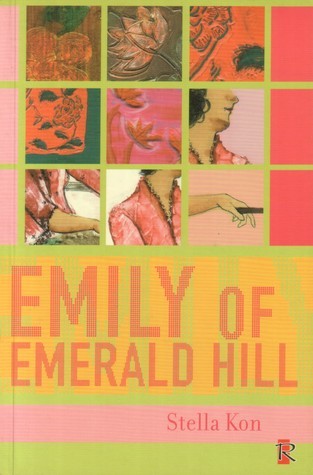 |
Other than these books, we also recommend students to read from reputable news sites:





Here’s why reading is important:
Brainpower Boost:
- Cognitive Development: Reading strengthens critical thinking, problem-solving, and analytical skills. It exposes teens to complex ideas and vocabulary, enhancing their overall cognitive function.
- Memory and Concentration: Regularly engaging with text improves memory and strengthens concentration spans, beneficial for academic success and beyond.
Emotional Intelligence and Empathy:
- Understanding the World: Books offer windows into different cultures, experiences, and perspectives. This fosters empathy and helps teens develop a deeper understanding of the world around them.
- Social and Emotional Learning: Reading exposes teens to a wide range of emotions and characters, allowing them to explore and navigate their own emotions in a safe space.
Lifelong Skills and Identity:
- Communication and Writing: Reading strengthens vocabulary and writing skills by providing exposure to different writing styles and sentence structures.
- Curiosity and Imagination: Books spark curiosity and ignite the imagination. They encourage exploration of new ideas and interests, helping teens develop their identities.
Stress Relief and Relaxation:
- Escape and Entertainment: Reading provides a healthy escape from daily pressures and allows teens to unwind and relax. It can be a source of comfort and entertainment.
- Stress Management: Getting lost in a good book can be a great way to de-stress, improve mood, and promote overall mental well-being.
Additionally:
- Improved Academic Performance: Strong reading skills are linked to better academic performance across all subjects.
- Vocabulary Expansion: Reading exposes teens to new words, improving their vocabulary and communication skills.
- Lifelong Learning Habit: Developing a love for reading in their teens sets the stage for lifelong learning and knowledge acquisition.
How Indigo Nurtures the Love for Reading:
Indigo’s pedagogy stands out as a uniquely tailored educational experience, thoughtfully designed to cater to the revised syllabus, academic requirements and latest exam trends.
Developed through rigorous research and meticulous design, our notes include current affairs and model essays, where students can extract relevant examples to use in their own exams. Reading a model essay every lesson not only helps students understand the requirements on writing a good essay, but also aids learning vocabulary and sentence structures. At indigo, we provide ala-carte essay services where students can upload their written essays for our teachers to mark, as well as provide consultation services when students are in need. Additionally, Indigo’s Oracle Telegram channel where our teachers curate relevant news articles that our students can read to gain extra knowledge.